
Packing Guide
What to Pack for a Europe Trip
Updated April 2026 · By Pack For Editorial · Based on 31 city-specific guides
I've done the thing where you sit on a suitcase trying to close it, already sweating, already regretting that third pair of jeans. Did it before Florence, did it before Iceland, finally stopped doing it somewhere around my fourth trip. This is the list I actually use now — the one that fits carry-on, handles a 35°C afternoon in Antalya and a 2°C morning in Zermatt, and doesn't make you look like you're on your way to the gym when you walk into a church.
I'm not going to tell you to pack "versatile neutrals" and leave it at that. That advice is technically true and practically useless. I'll tell you how many tops, what kind of shoes, which plug adapter, and why your rain jacket matters more than your nicest outfit.
The one-bag capsule that actually works

After building capsule wardrobes for 31 European cities — from Paris in July (15–25°C, warm days, storm risk) to Lapland in December (−13 to −6°C, dark and snowy) — the structure stays surprisingly consistent. The pieces change, but the count doesn't.
Here's what 7 pieces looks like for a summer trip:
- 1 lightweight linen shirt or overshirt — Your church cover-up, your evening layer, your "I look put together" piece. In Florence it's your shield against the Duomo glare. In Paris it works over a simple top on cooler Seine evenings.
- 2 breathable tops or blouses — Enough for alternating days. Cotton or a cotton-modal blend, nothing synthetic that traps heat. You're walking 15,000 steps a day; act like it.
- 2 light trousers or skirts — Linen or cotton, not heavy denim. In Budapest at 27°C you'll thank yourself. In Amsterdam at 14°C, layer tights underneath and they still work.
- 1 smarter outfit — For that one dinner in the Oltrarno, aperitivo at a Milanese rooftop, or a Bastille Day evening in Paris. Doesn't need to be formal — just intentional.
- 1 pair of walking shoes — The single most important thing you're packing. More on this below.
That's it. Seven pieces, three or four days of outfits before you need a sink wash or a launderette. I used almost this exact list in Florence, Dubrovnik, and Venice — different cities, different vibes, same suitcase.
For cooler destinations — Edinburgh in June (10–17°C) or Iceland in August (7–14°C) — swap the linen for a fleece or merino sweater, add a waterproof shell, and switch the walking shoes for water-resistant hiking shoes. The number of pieces barely changes.
Shoes: the thing that actually matters

Here's what nobody on packing blogs tells you: your shoes decide whether you enjoy the trip or just endure it. European cities are cobblestones, uneven flagstones, museum marble, metro stairs, and church thresholds — all in the same afternoon.
Bring one pair. Make it:
- Supportive enough for 8+ miles of walking
- Decent-looking enough for a restaurant (not trail runners)
- Broken in before you leave
I've seen people in brand-new white sneakers limping through Cinque Terre's steep paths at 29°C and through Bruges's wet cobbles at 15°C. Both times it was day two. Leather low-tops, clean minimal sneakers, or a good pair of Chelsea boots — pick one and wear it on the plane.
For a beach-heavy trip (Santorini, Amalfi Coast, Costa del Sol), add one pair of secure sandals with a back strap. Not flip-flops — you'll be walking cliff paths, ferry gangways, and church steps where grip matters.
The weather problem: why "pack for summer" means nothing

People say they're packing for "summer in Europe" as if that's one weather system. It's not. Here's what July actually looks like across the continent:
| City | High | Low | What it feels like |
|---|---|---|---|
| Antalya | 35°C / 95°F | 27°C / 81°F | Very hot, dry sun — you need UV protection and breathable everything |
| Vienna | 30°C / 86°F | 18°C / 64°F | Hot afternoons, sudden storms — pack a thin rain layer |
| Paris | 25°C / 77°F | 15°C / 59°F | Warm days, cool evenings — the overshirt earns its spot |
| Bruges | 21°C / 70°F | 15°C / 59°F | Mild, but evenings by the canals get cool fast |
| Norway Fjords | 19°C / 66°F | 13°C / 55°F | Rain jacket weather, even in July |
| Iceland | 14°C / 57°F | 7°C / 45°F | Cool, bright, changeable — pack for autumn, not summer |
That's a 21-degree spread across the same month. If you're doing a multi-city trip — say Paris → Bruges → Amsterdam — you're dealing with warmer afternoons and cooler canal-side evenings on the same day. Layers are not optional, they're the whole strategy.
Here's my rule: check the low temperature for your destination, not the high. The high is when you're in a museum. The low is when you're walking back to the hotel at 10pm, slightly lost, slightly cold, wishing you'd brought that extra layer.
What to wear so you don't look like a tourist
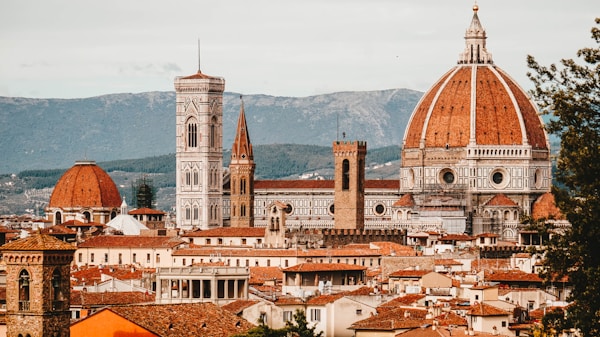
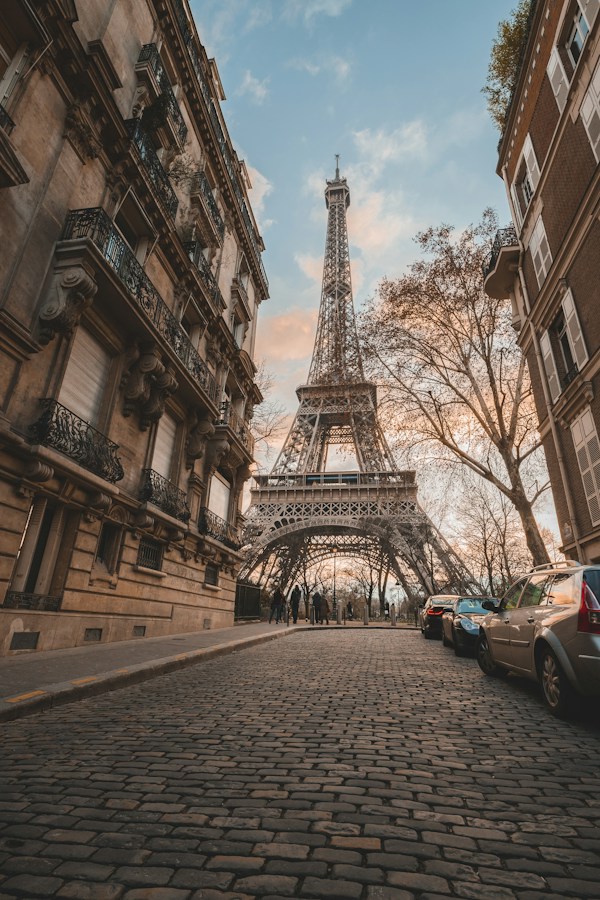
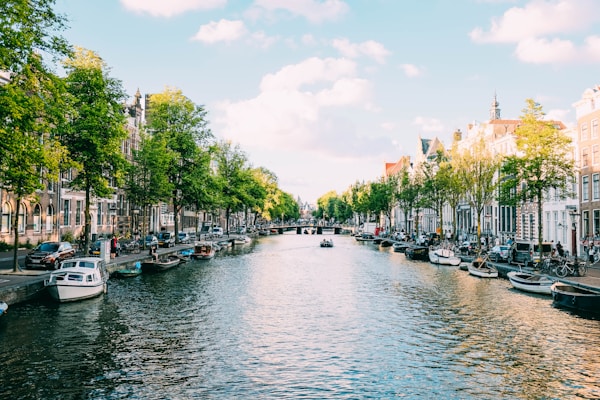
This one matters more than people admit. In Florence, locals wear sleeved linen shirts, airy dresses with proper sandals, neat loafers, and sunglasses that look chosen rather than emergency-bought. In Milan, people look polished even on the tram. In Amsterdam, the vibe is more relaxed — practical layers, good bikes, minimal fuss — but still considered.
The pattern across every European city I've packed for:
- Skip the athleisure. No gym shorts in the historic center. No brand logos bigger than a coin.
- Match the city's palette. Every city has dominant colors drawn from its architecture and landscape. Santorini is white and cobalt blue. Florence is terracotta and warm stone. Edinburgh is basalt grey and moss green. Wear those tones and you look like you belong.
- One step up from what feels natural. If you'd wear a t-shirt, wear a polo or a linen button-down. If you'd wear shorts, wear chinos. The adjustment is tiny but it changes how you're treated — at restaurants, by locals, and in your own photos.
Each of our city guides includes a full color palette pulled from the destination — dominant, secondary, and accent colors with specific outfit strategies. It sounds nerdy. It makes your photos significantly better.
The rain layer you will need

Even Mediterranean cities get summer storms. Florence in June averages 6 rain days. Paris in July has storm risk every week. Budapest gets stormy spells in June. And if you're heading anywhere on the Atlantic side — Ireland, Edinburgh, the Norwegian fjords — rain isn't a risk, it's a feature.
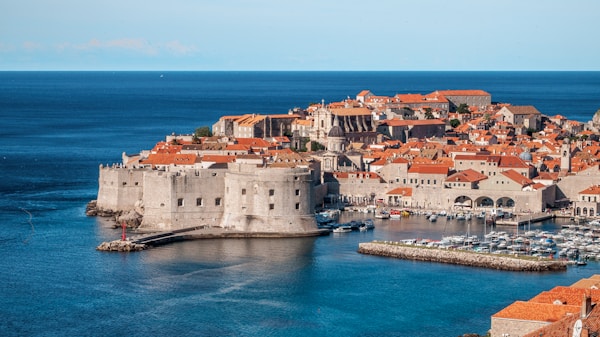
Pack a packable rain shell. Not a hoodie. Not a denim jacket. Something that folds into its own pocket, weighs almost nothing, and actually keeps water out. You'll use it on boat trips in Dubrovnik, waterfall walks in Iceland, and unexpected downpours in Berlin — and it won't take up more space than a rolled-up t-shirt.
Plugs, adapters, and the thing everyone forgets
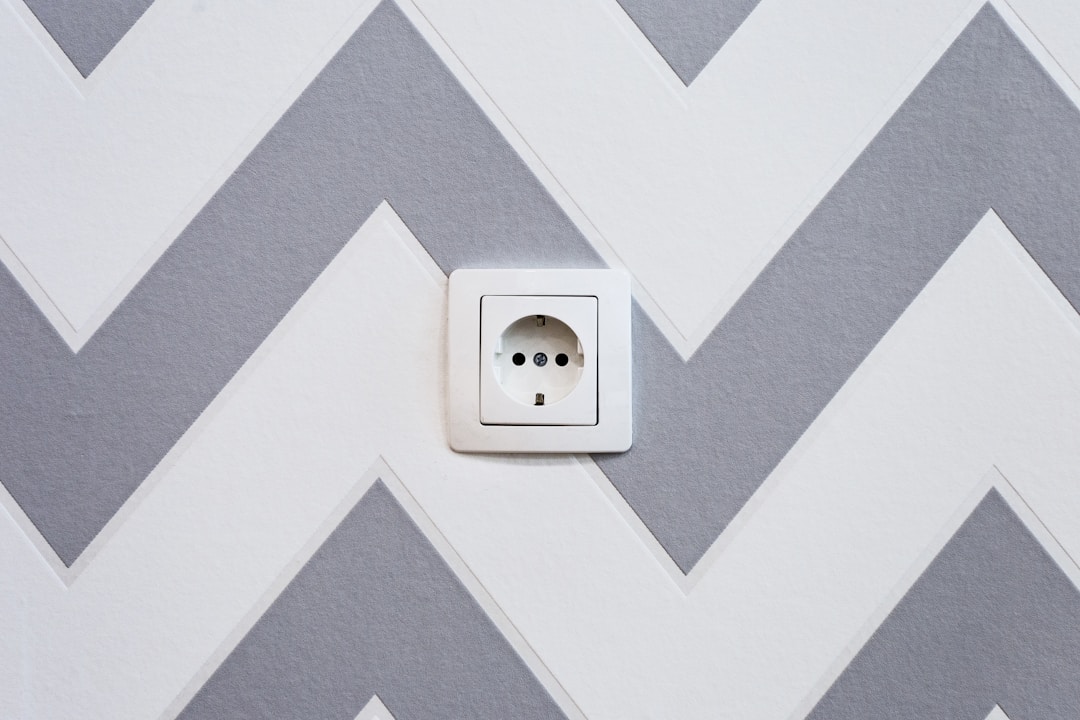
Most of continental Europe uses Type C and Type F plugs — that's the two round prongs — at 230V / 50Hz. This covers France, Germany, Spain, Italy, Greece, Netherlands, Austria, Switzerland, Portugal, Turkey, and most of Scandinavia.
The UK and Ireland use Type G (the big three-prong one).
If you're coming from the US, Canada, Australia, or Asia, you need an adapter. Get a universal one with USB-C ports and you're covered for every country on this list. Buy it before you leave — airport adapters are overpriced and the ones at European convenience stores are hit-or-miss.
One thing people don't think about: voltage. European outlets are 230V versus the 110V in North America. Most modern phone chargers and laptop adapters are dual-voltage (check the fine print — it'll say "100–240V"). Hair tools often aren't. If your straightener or dryer only says "110V," leave it home or buy a voltage converter. Plugging a 110V device into a 230V outlet doesn't just not work — it can burn out the device or trip the building's circuit.
The stuff most lists leave out
A crossbody bag, not a backpack. In crowded European cities — metro cars in Paris, market streets in Istanbul, bridge crossings in Venice — a crossbody bag stays in front of you, is harder to pickpocket, and doesn't knock into people in tight spaces. Backpacks are for hiking days only.
A reusable water bottle. Tap water is drinkable in most of Western and Northern Europe. Public fountains are everywhere in Rome, Florence, and Zurich. You'll spend less, carry less plastic, and stay hydrated on hot walking days.
Sunscreen and sunglasses, even in "mild" destinations. Stockholm in April is only 1–9°C, but the sun angle is low and intense after a dark winter. Santorini in August is obvious, but even Edinburgh's long June days — 10–17°C with 17 hours of daylight — will burn you if you're out all day without thinking about it.
A compact umbrella. Better than a rain jacket for cities where it drizzles but doesn't pour. Amsterdam, Bruges, Lisbon, Zurich — these are umbrella cities, not shell-jacket cities. You want both if you're doing two or more weeks, but if you can only pick one additional item, the umbrella weighs less.
Modest layers for churches. Covered shoulders and knees are required at the Duomo in Florence, St. Peter's in Rome, the Blue Mosque in Istanbul, and most major churches across Southern Europe. That linen overshirt from your capsule does this job perfectly — no need to pack a separate "church outfit."
Carry-on vs checked: the honest answer
For trips under two weeks, carry-on only. Seriously. I did 10 days across Florence, Venice, and Milan with one 35L bag. The capsule wardrobe approach works because European laundry is easy — most Airbnbs have a washer, and launderettes exist in every tourist city.
Advantages of carry-on only in Europe specifically:
- Budget airlines (Ryanair, EasyJet, Vueling) charge €30–60 for checked bags, sometimes more than the flight itself
- Cobblestone streets and narrow hotel staircases are awful with large rolling luggage
- Train travel is faster when you can walk on and off without wrestling a bag through the aisle
- You never wait at baggage claim — straight through to the metro or taxi
For trips over two weeks, or winter trips where coats and boots take up space, check a bag. No shame in it. But even then, aim for a medium-sized roller rather than the biggest one you own. European hotel rooms and apartment hallways are smaller than you think.
The 3-day, 7-day, and 14-day breakdown
3-day city break (one destination):
Everything from the 7-piece capsule minus one top and one bottom. You're doing laundry once or not at all. One pair of shoes. Total: 5 pieces of clothing + shoes + accessories.
7-day trip (one or two cities):
The full 7-piece capsule. One pair of shoes, one pair of sandals if it's coastal or above 25°C. Compact umbrella. One crossbody bag. Plan one sink wash around day 4.
14-day multi-country trip:
Same 7 pieces, plus one extra top and one extra bottom for variety. Add the rain shell. This is where outfit colors start to matter — mixing neutrals with one or two pieces that pick up the colors of where you are. Check each city's color palette in the individual guides before you pack.
What to skip
I'll save you the space and the regret:
- Heavy jeans — too hot above 22°C, too slow to dry when washed, too bulky in the bag
- More than two pairs of shoes — you'll wear one pair 90% of the time, the second pair 10%, and the third pair zero
- "Just in case" outfits — that cocktail dress or blazer you pack for the fancy dinner that never happens. One smart outfit covers it
- Full-size toiletries — decant into travel bottles. You can buy shampoo in literally any European city
- Travel pillows, excessive electronics, books you won't read — dead weight. A Kindle replaces five books. Your phone replaces a camera, a guidebook, and a map
Before you zip the bag
Lay everything out on the bed. Remove one thing. That's the right amount.
Then check the weather for your destination — not just the average, but the forecast for your actual dates. A cold snap in Salzburg or a heatwave in Paris changes the plan more than any packing list can anticipate.
If you want the full breakdown for a specific city — weather stats, capsule wardrobe, interactive packing checklist, outfit colors matched to the architecture, the whole thing — we've built 31 individual city guides that go much deeper than any general Europe list can. Each one is tailored to the city and the month, because packing for Santorini in August and packing for Stockholm in April are genuinely different problems.
Good luck. Pack less than you think you need. You'll be fine.