What to Wear in Iceland in August (2026): Outfit tips for neon-green moss & black-lava backdrops
August · 7–14°C (45–57°F) · Waterproof layers, grip shoes, and warm extras for waterfalls, black-sand beaches, road-trip stops, and windy viewpoints
Start Here
Table of Contents
Setting the Scene
What to Expect in Iceland in August
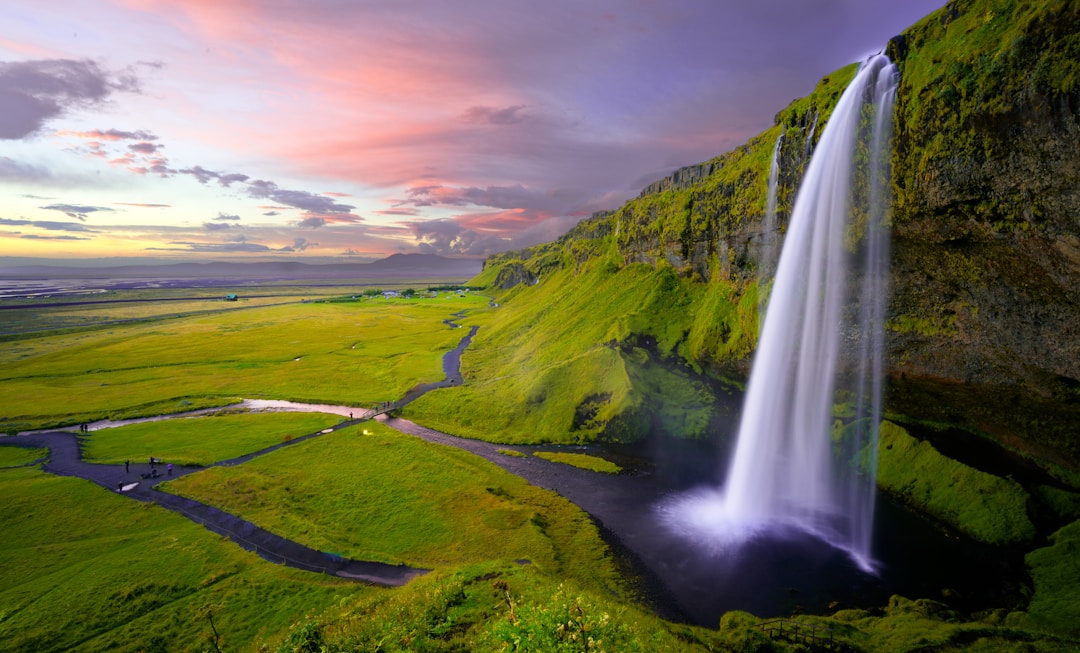
You smell Iceland before you adjust to it: sulphur near geothermal towns, wet moss after rain, sea salt on the south coast, and coffee and cinnamon buns coming out of Reykjavík bakeries while people still wear jackets in August. The soundscape is just as specific. Waterfalls thunder before they appear, gravel spits under tyres at roadside pull-offs, puffins chatter on cliff edges, and tour buses sigh open in places that look too empty to be busy until the doors fold back. August is green in a way many first-time visitors do not expect. Lava fields look padded with moss, lupins have only just faded in many areas, and the black beaches around Vík make every patch of bright rain gear or red house stand out harder. Locals do not dress for summer postcards. In Reykjavík, Húsavík, and small roadside towns you see shells, fleeces, trail shoes, wool jumpers, and caps because Iceland's weather still behaves like a negotiation, not a promise.
August is one of the easiest months to move around Iceland, but it is also one of the months that tricks people into underpacking. The roads are open, the highlands are tempting, and the evenings still stay light late, so you spend longer outside than you planned. A day can start under blue sky at Seljalandsfoss, turn windy at Reynisfjara, become sunny again near a turf-roof church, and end cold on a whale-watching boat in North Iceland. That range is what shapes how Icelanders and repeat visitors dress. They layer for the stop, not just for the drive. Reykjavík still has people in technical jackets over everyday clothes, and even around the Golden Circle you see plenty of locals carrying waterproofs in their cars on seemingly clear days. August in Iceland feels alive rather than bleak, but the country still insists on weatherproof thinking, especially anywhere water, coast, gravel, or elevation enters the plan.
Waterfall Spray
Seljalandsfoss soaks jackets fast
Sulphur Steam
Geothermal air cuts through rain
Cliff Chatter
Seabirds crowd windy headlands
Gravel Stop
Pull-offs turn muddy quickly
Iceland weather in August
Average Temperature
August
14°C / 57°F
7°C / 45°F low
Cool, bright, changeable
15 days
Short showers can hit any route
5 hrs
Long usable daylight still lingers
78%
Damp air hangs after rain
14 kmh / 9 mph
Waterfalls and coasts feel colder
Local Style
What does Iceland in August feel like?
🧥
Iceland in August often feels milder on paper than it does on your skin. If you are arriving from continental Europe or North America in full summer mode, the 14°C (57°F) highs can still feel cold once you add waterfall spray, Atlantic wind, and long roadside stops, while anyone used to northern climates will find it comfortable as long as they pack proper layers rather than guessing from the calendar.
Style Palette
Colors of Iceland
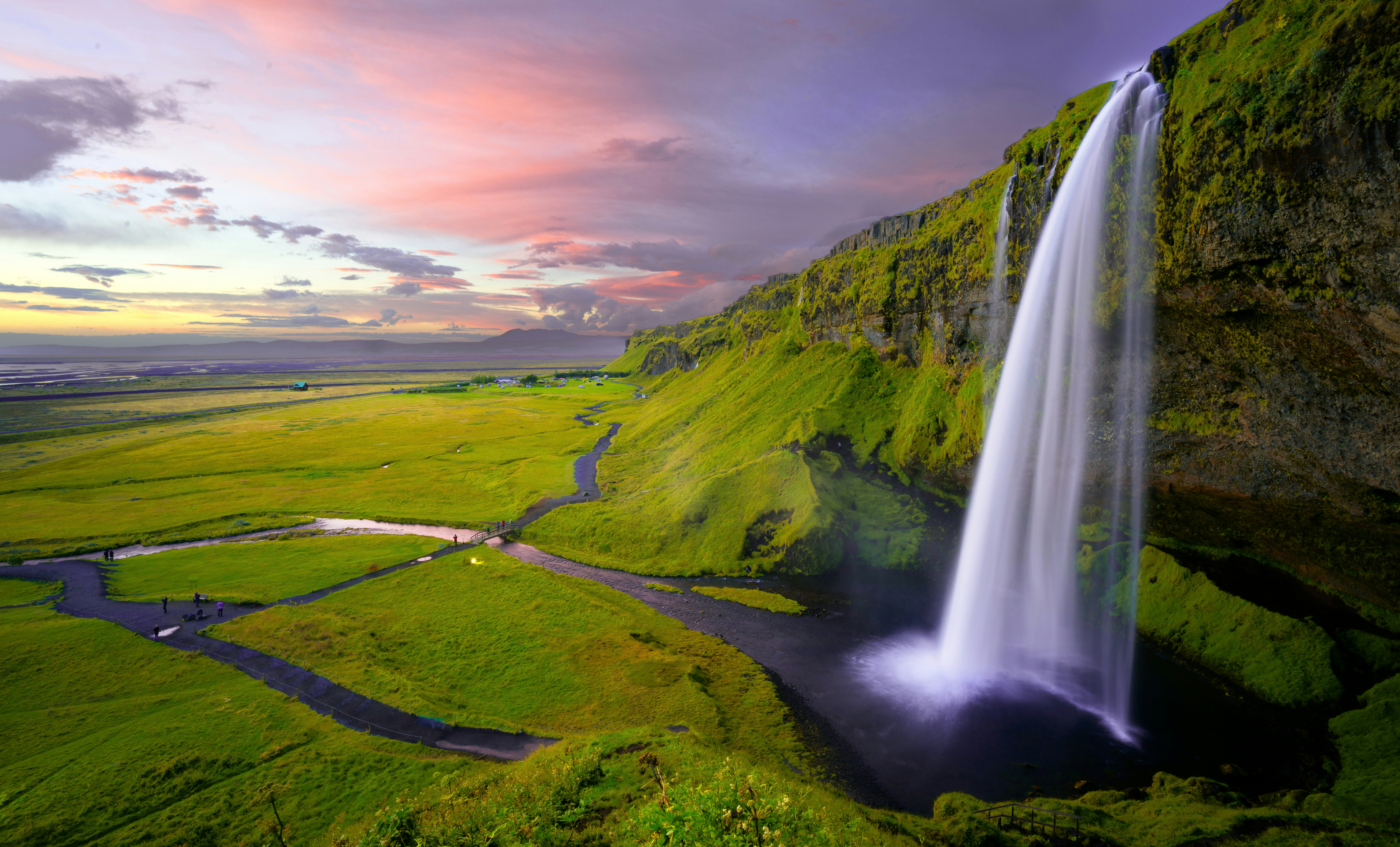
The plush, almost-neon green woolly moss that blankets the jagged black lava fields during the peak of the August thaw.
Blend into the highlands for a rich, organic look that makes you feel like a natural part of the rugged terrain.
This warm, desaturated olive is a total glow-up for anyone with warm or olive undertones.
The charcoal-to-black volcanic sand of Reynisfjara and the hexagonal rock columns at the base of the southern cliffs.
It provides a sharp, dramatic grounding effect that makes any other colour you wear look twice as vivid.
This off-black is softer than a true jet black, making it much kinder to pale, cool complexions.
The luminous, compressed blue ice of the floating bergs in the glacier lagoon, especially under the soft August cloud cover.
Pop beautifully against the dark sand; it’s a ethereal, high-contrast choice that mirrors the island's frozen heart.
This icy pastel is a dream for cool undertones and brings out the clarity in fair skin.
The heritage iron-red paint found on the traditional corrugated metal houses in the capital's old centre.
Avoid wearing this if you're posing against the red houses, but it’s a brilliant 'focal point' colour for the green valleys.
This deep, earthy red is exceptionally striking on both very fair and very deep skin tones.
Signature Outfit
A Vik Basalt technical shell over an Eldhraun Moss wool jumper. Add a Jökulsárlón Cyan beanie for a pop of light near your face. It’s a rugged, weather-ready look that mirrors the island’s elemental contrast—fire, moss, and ice.
Blend In Like a Local
How to Dress in Iceland Without Looking Like a Tourist
Ditch the flimsy white sneakers and pale pastels like baby pink. Iceland’s mud and volcanic dust will ruin white shoes in minutes, and delicate pastels feel visually 'weak' against the epic, prehistoric scale of the fjords.
Top 3 Outfit Colors to look perfect in every Photo
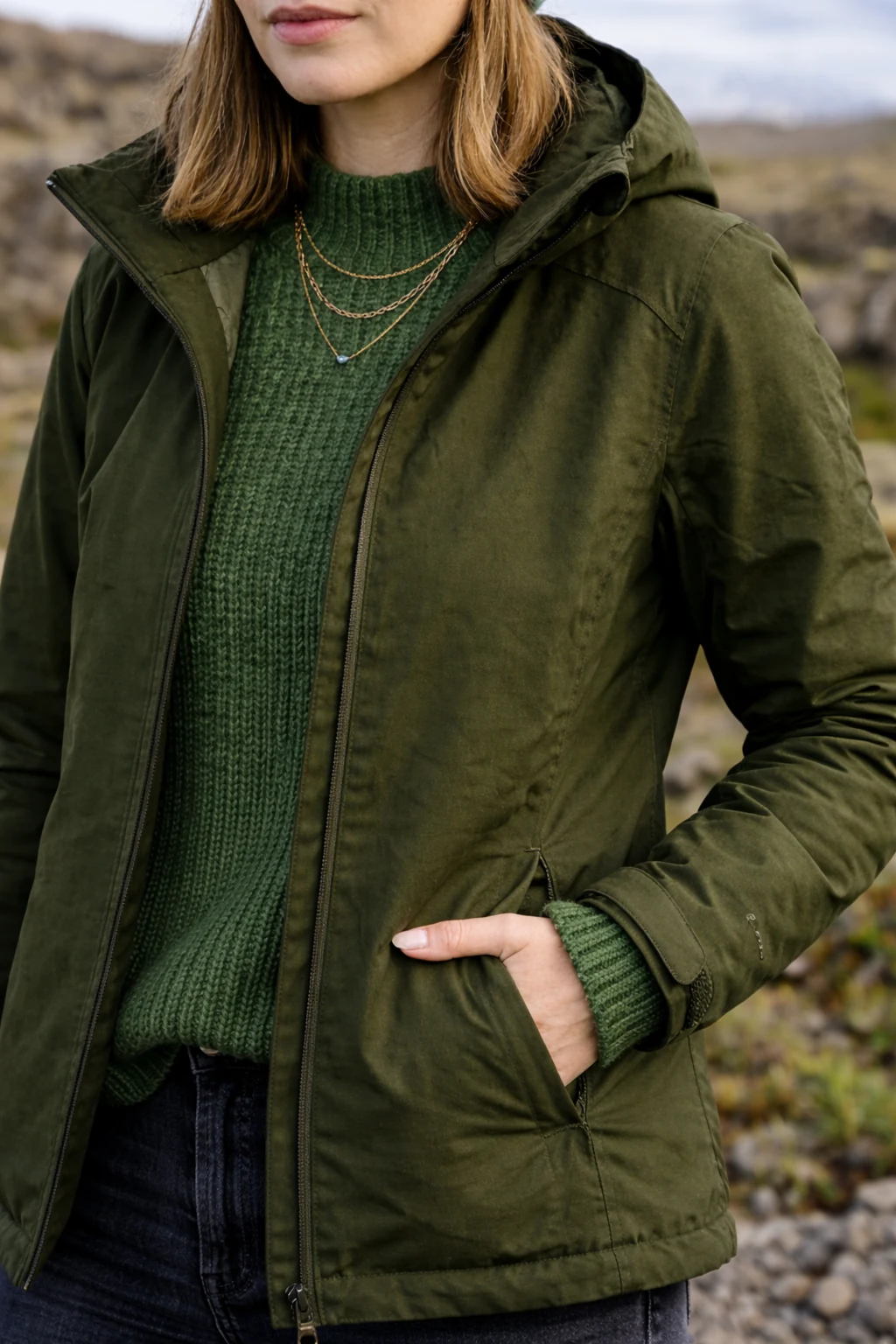
Blend In
Go for a deep army green to match the shaded crevices of the canyons for a low-key, explorer aesthetic.
Wardrobe Breakdown
What to wear in Iceland in August?
Outerwear
The Best Waterproof Jackets for Iceland in August
The biggest Iceland mistake is trusting a sunny hour. August is one of the easiest months to travel, but you can still move from dry roads in the south to spray-heavy waterfalls, sideways rain on the Snæfellsnes coast, or a wind-lashed lookout on the way to Seyðisfjörður in the same day. Locals solve this with a proper waterproof shell over a fleece or merino layer rather than one thick coat or no jacket at all. You see shells hanging in car back seats everywhere because nobody sensible leaves home without one. Do not bring a fashion trench or a denim jacket as your main outer layer. Pack one real waterproof and one insulating piece that still works indoors at dinner in Reykjavík.
Layers
The Best Mid-Layers for Iceland's Wind, Spray, and Long August Days
What earns its place in Iceland is not another summer top but a useful mid-layer. Even in August, waterfall spray can chill you quickly, whale-watching boats off Reykjavík or Húsavík feel colder than the harbour, and evening temperatures drop fast once you stop moving. Locals rely on fleece, merino, thin puffers, and technical half-zips because they can move between the road, a café, a windy cliff, and a geothermal stop without constant outfit changes. You will notice how often people carry a sweater in sunshine. Do not pack only thin T-shirts because the roads are open and the moss looks summery. Bring two or three warm mid-layers, and make at least one of them something you are happy to wear in photos under grey Icelandic light.
Footwear
The Best Shoes for Iceland's Wet Paths, Black Sand, and Gravel Pull-Offs
Footwear matters more in Iceland than the itinerary first suggests because even relaxed road trips mix slippery boardwalks, muddy waterfall approaches, gravel shoulders, black-sand beaches, and wet grass. Around Skógafoss, Þingvellir, Jökulsárlón, and the peninsulas, locals and repeat visitors wear hiking trainers, trail shoes, or waterproof sneakers rather than anything smooth-soled or precious. The ground changes too fast for city-only footwear. Do not bring fashion flats or canvas trainers as your main pair, and do not assume one dry-weather shoe will survive all week. Pack one pair with real tread and water tolerance, then add a second easier pair only if you know you will spend more time in Reykjavík than at natural sites.
The Edit
Iceland Capsule Wardrobe
7 days, carry-on only. Built for Iceland's road-trip stops, waterfall spray, black-sand beaches, geothermal towns, and boat-heavy days.

Carry-on only
Your weather shield for Seljalandsfoss spray, Reynisfjara wind, and roadside stops that turn wet without warning.
Shop shells →The layer that saves you on whale boats, glacier lagoon stops, and long evening drives when the temperature drops fast.
Shop knits →Useful for layering between Reykjavík cafés, Golden Circle viewpoints, and colder countryside stops.
Shop tops →Better than jeans for muddy pull-offs, damp boardwalks, and geothermal areas where rain and spray both matter.
Shop trousers →For colder inland mornings and northern or highland detours that feel much less like summer than Reykjavík does.
Shop puffers →Your main pair for gravel paths, black-sand edges, slippery viewing platforms, and all the wet places Iceland makes normal.
Shop shoes →The daypack holds layers, the cap helps on long bright drives, and the beanie earns its place on windy cliffs and colder boats.
Shop packs →The Core
Your Packing Checklist
0 of 28 items packed
0%
Outerwear
0/4- Waterproof shell for waterfall spray at Seljalandsfoss, roadside drizzle, and wind on the South Coast.
- Light insulated layer for whale watching in Húsavík, glacier lagoons, and colder inland mornings.
- Packable rain cover for Golden Circle stops and weather that flips before the next fuel station.
- Thin beanie for black-sand beaches, puffin cliffs, and windy viewpoints where August feels colder than expected.
Tops & Layers
0/4- Merino or fleece mid-layer for Jökulsárlón, Hraunfossar, and any boat or glacier-facing stop.
- Long-sleeve base layers for geothermal towns, north-coast wind, and easier layering under a shell.
- Quick-dry tops for road-and-hike days when spray, rain, and sunshine all show up within hours.
- One neat warm layer for Reykjavík dinners and nights where Iceland still feels outdoorsy after dark.
Bottoms
0/3- Quick-dry trousers for muddy trailheads, wet lava paths, and roadside pull-offs on the Ring Road.
- One darker casual trouser for Reykjavík evenings and cleaner city days between nature stops.
- Skip heavy jeans as your daily default; Iceland's damp air and spray make them slow to dry and unpleasant on the road.
Footwear
0/4- Water-resistant hiking shoes for black-sand beaches, waterfall approaches, and slippery viewing platforms.
- Grip-sole trainers for Reykjavík, easier stops, and backup walking when the weather behaves.
- Warm hiking socks for long driving days with repeated cold, damp outdoor stops.
- Do not bring smooth-soled city shoes for Iceland's wet timber paths, gravel shoulders, and lava-field walks.
Accessories
0/4- Sunglasses for long August daylight and bright glare off glacier water and wet black sand.
- Cap for exposed coast roads and long hours outside on the south shore or Snæfellsnes.
- Compact daypack for carrying shell, fleece, camera gear, and snacks between scenic stops.
- Reusable water bottle for Ring Road days where the next open shop can still be a while away.
Toiletries & Health
0/4- SPF 30+ or higher for reflected light off glacier lagoons, wet roads, and long northern daylight.
- Lip balm and moisturizer for wind exposure and geothermal air that can dry skin surprisingly fast.
- Blister plasters for waterfall paths, lava trails, and those short 'just a quick stop' walks that keep adding up.
- Prescription medicines plus a copy of the prescription for an Icelandic apótek if you need assistance.
Documents & Tech
0/5- Type C or F plug adapter for Iceland's 230V, 50Hz sockets if you use UK, US, or Australian plugs.
- Passport and entry paperwork: many non-EU visitors, including UK, US, Canada, Australia, and New Zealand passport holders, can visit Iceland visa-free for up to 90 days in any 180-day Schengen period in 2026.
- Passport validity check for Schengen travel in 2026: for most non-EU visitors, the passport should be less than 10 years old on entry and valid for at least 3 months beyond your planned Schengen departure.
- EES and ETIAS note for August 2026: Iceland is in the Schengen Area, so first non-EU entries may involve Entry/Exit System biometric registration at the border; ETIAS is not yet required for August 2026 because the EU says it starts in the last quarter of 2026.
- Install the Klappið app for Strætó buses in the capital area, keep road and weather checks handy for self-drive days, and use the Hopp taxi app in Reykjavík because Uber and Bolt do not operate as normal ride-hailing services in Iceland.
Affiliate Picks
Shop the Essentials
Luggage Guide
What Luggage to Bring to Iceland
Iceland is hard on luggage because one trip can include airport buses, gravel car parks, ferry ramps, guesthouse stairs, and muddy roadside stops in the same week. Compact luggage is far easier than a giant case when the plan includes both Reykjavík and the Ring Road.
Weekend trip
🎒 Structured travel backpack
25–30 L / 7–8 gal
- ✓Best for gravel pull-offs and waterfall approach paths
- ✓Easiest on airport transfers and smaller guesthouses
- ✓Much simpler than wheels on muddy or uneven parking areas
Road trip
🧳 Small carry-on suitcase
35–45 L / 9–12 gal
- ✓Most practical for 4 to 7 nights in Iceland's mixed August weather
- ✓Fits waterproofs, mid-layers, and a second pair of shoes without overpacking
- ✓Still manageable in rental cars, airport buses, and smaller hotels
Longer loop
🛄 Medium check-in suitcase
60–70 L / 16–18 gal
- ✓Useful if Iceland is one stop on a longer Nordic trip
- ✓Leaves room for extra weather layers and souvenirs from Reykjavík
- ✓Still easier than an oversized case on repeated hotel and car changes
Plan Around Events
Events That Affect What You Pack
1–3 August 2026
Verslunarmannahelgi (Merchants' Weekend)
This long weekend is heavily camping- and festival-oriented across Iceland, so if your trip overlaps it, bring a warmer layer and proper waterproofs even if the daytime forecast looks mild.
22 August 2026
Reykjavík Culture Night and Reykjavík Marathon
Culture Night runs from daytime street events into late-night harbour fireworks, so bring one warmer layer than a daytime city walk needs and keep a compact waterproof in your bag.
Before You Charge
Plug & Outlet type in Iceland


🇺🇸 From the US?
You need a plug adapter in Iceland, and older US hair tools may also need a voltage converter because Iceland uses 230V. Phone chargers, laptops, and camera chargers are usually fine if the plug brick says 100-240V.
🇬🇧 From the UK?
You need a Type C or F adapter because British Type G plugs do not fit Icelandic sockets. Most UK phone and laptop chargers already handle 230V, but heated hair tools are the ones most likely to catch you out.
🇩🇪 From Germany or much of continental Europe?
You are usually fine without an adapter because Iceland commonly accepts the same Type C and Type F plugs and uses the same 230V, 50Hz supply. This is one of the easiest packing matches for Iceland.
🇦🇺 From Australia?
You need a plug adapter because Australian Type I plugs do not fit Icelandic sockets, but the voltage is the same 230V. Most chargers work normally, though straighteners and similar hair tools still deserve a quick check.
Getting Around
How to Get Around Iceland
Iceland is not one walkable destination but a country of ring-road drives, Reykjavík transit, scenic pull-offs, and a few key ferries and domestic flights. You can walk parts of Reykjavík easily, but most Iceland itineraries make sense only when you combine walking with buses, tours, ferries, or a rental car.
Walking
Reykjavík is very walkable in the centre, but waterfalls, black-sand beaches, geothermal areas, and most famous landscapes need transport between walks.
No app needed
Strætó
Strætó is Iceland's main public bus network, especially in the capital area, and the official Klappið app is how many visitors buy tickets and passes for Reykjavík buses.
Visit site →Herjólfur ferry
Herjólfur is the key ferry to Vestmannaeyjar from Landeyjahöfn, useful if your August plan includes puffins, volcano history, or the Westman Islands festival atmosphere.
Visit site →Hopp e-scooters and e-bikes
Hopp scooters and bikes are practical in Reykjavík for quicker city hops, though they are not a substitute for intercity transport or road-trip travel.
Visit site →Hopp Taxi
Iceland does not have normal Uber or Bolt service, so Hopp Taxi is the most useful app-based taxi option in Reykjavík and for some airport transfers.
Visit site →Rental car
A rental car is still the simplest way to connect waterfalls, black-sand beaches, geothermal pools, and rural guesthouses without routing everything through Reykjavík.
No app needed
Domestic flights
Domestic flights matter more in Iceland than in many countries because Akureyri, Egilsstaðir, Ísafjörður, and other regions can save major driving time if your trip is short.
Visit site →In Case You Forgot Something
Where to Buy What You Forgot
Kringlan
Shopping MallThe easiest one-stop Reykjavík answer for clothing, toiletries, pharmacy items, electronics, and practical extras before a road trip.
📍 Kringlan 4, 103 Reykjavík
🕐 Mon-Fri 10:00-18:00; Sat 11:00-17:00; Sun 12:00-17:00
Icewear Laugavegur
Outdoor ClothingUseful for proper Iceland-ready outerwear, wool layers, hats, gloves, and weatherproof clothing that actually suits the country.
📍 Laugavegur 91, 101 Reykjavík
🕐 Mon-Wed 09:00-21:00; Thu-Sat 09:00-22:00; Sun 09:00-21:00
Bónus Laugavegur
SupermarketBest for road-trip snacks, bottled water, breakfast supplies, picnic food, and lower-cost grocery top-ups before heading out of Reykjavík.
📍 Laugavegur 59, 101 Reykjavík
🕐 Hours vary by day; check current store hours before going
Lyfja Laugavegur
ApótekA central pharmacy for motion-sickness tablets, blister plasters, after-sun, pain relief, and other Iceland trip essentials.
📍 Laugavegur 16, 101 Reykjavík
🕐 Mon-Fri 09:00-18:00; Sat 11:00-16:00; Sun closed
Hagkaup Skeifan
Department StoreGood for toiletries, snacks, travel accessories, simple clothing, and all the annoying bits that get forgotten on fly-drive trips.
📍 Skeifan 15, 108 Reykjavík
🕐 Open 24 hours
Ellingsen
Outdoor GearA useful Reykjavík stop for technical clothing, hiking gear, waterproof accessories, and practical kit if your packing was too optimistic.
📍 Fiskislóð 1, 101 Reykjavík
🕐 Mon-Fri 10:00-18:00; Sat 11:00-16:00; Sun closed
Free download
Iceland packing checklist
Get your Iceland printable checklist plus a bonus route guide with waterfall stops, geothermal pool tips, and smart road-trip planning notes.
No spam, ever.
Same Time of Year
Other European cities to visit in August
A diverse pick across countries — packing for August weather, with city-specific color palettes and capsule wardrobes for each.
What to pack for Amalfi Coast in August
Italy
What to pack for Brussels in August
Belgium
What to pack for Costa del Sol in August
Spain
What to pack for Interlaken in August
Switzerland
What to pack for Mykonos in August
Greece
What to pack for Saranda in August
Albania
What to pack for Algarve in August
Portugal
What to pack for Ibiza in August
Spain