What to Pack for Fjords in Norway in July (2026): Outfit tips for ink-blue water & mossy granite backdrops
July · 13–19°C (55–66°F) · Waterproof layers, grippy shoes, and warm extras for ferries, glacier viewpoints, valley hikes, and fast-changing fjord weather
Start Here
Table of Contents
Setting the Scene
What to Expect in Fjords in Norway in July
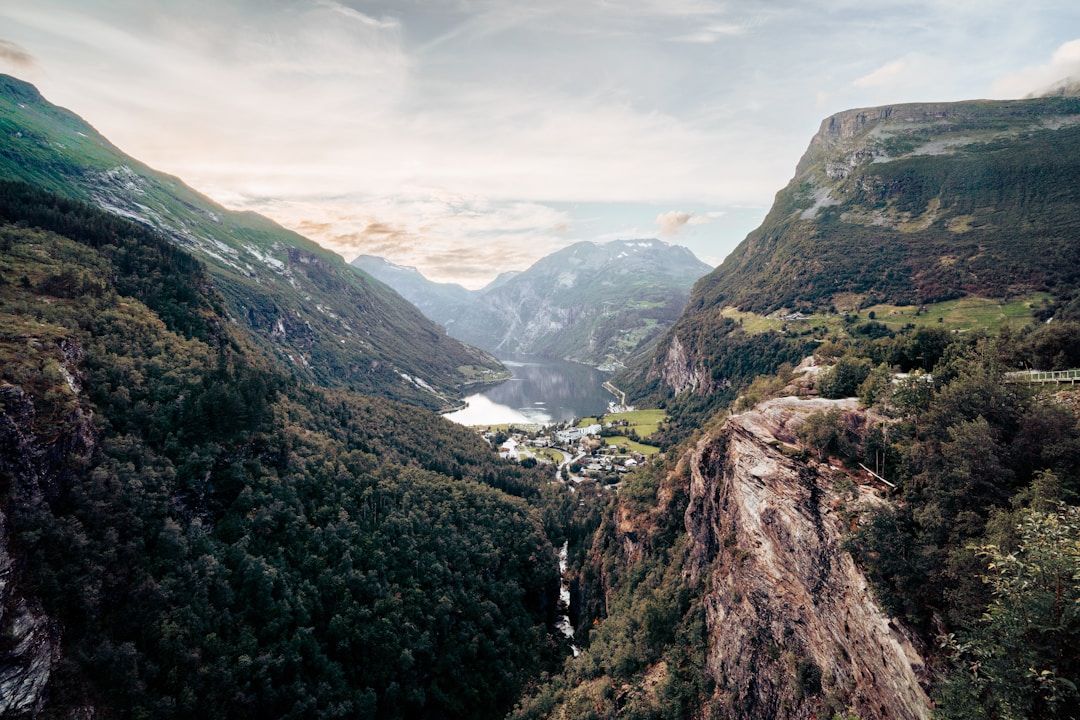
The fjords in Norway hit you first through the air. You smell wet pine, cold water, diesel from express boats, and that clean mineral scent that comes off rock faces after rain. The soundscape is just as specific: gulls over harbour quays, waterfalls you hear before you see, ferries docking with a metallic thud, and the softer rattle of campervans and tour buses pausing at viewpoints. In July the landscape is at full volume. Snow still hangs in streaks on higher shoulders, waterfalls are still fat from meltwater, and the slopes above places like Flåm, Geiranger, and the Hardangerfjord look impossibly green rather than rugged and bare. Locals do not dress for postcard summer. In Bergen, Flåm, and the smaller fjord villages, people wear waterproof shells, fleeces, hiking trousers, trainers, and puffers tied around their waists because they know a sunny quay and a glacier overlook can feel like two different countries in the same afternoon.
July is the season when the fjords are most usable and most deceptive. The days are long, ferry routes are in full swing, and the villages feel open and active, but the weather still moves with astonishing speed. A bright hour on the Nærøyfjord can turn to mist by the next bend, and warm sun in an inner fjord can disappear the moment you come back out toward the coast. That is what visitors miss if they pack only for summer. Around places like Aurland, Norheimsund, or Loen, locals dress for mobility: one set of clothes that works on a ferry, in a café, on a path, and in a sudden shower. The pace is outdoorsy rather than urban. You notice hikers with daypacks on the quay, families carrying rain jackets in sunshine, and people lingering late by the water because darkness comes so late. Norway's fjords in July reward anyone who packs for damp air, slippery steps, and an itinerary that keeps climbing higher and colder than the village map implies.
Ferry Spray
Deck wind chills fast
Waterfall Roar
Meltwater echoes through valleys
Pine Damp
Rain lifts forest scent
Viewpoint Pause
Buses empty into cold wind
Fjords in Norway weather in July
Average Temperature
July
19°C / 66°F
13°C / 55°F low
Mild days, changeable skies
20 days
Showers sweep in off the coast
7 hrs
Long bright evenings on the water
80%
Fjord air stays damp after rain
19 kmh / 12 mph
Fast boats and lookouts feel colder
Local Style
What does Fjords in Norway in July feel like?
🧥
July in Norway's fjords usually feels mild rather than hot, and it can read much cooler than the photos suggest once you step onto a ferry deck, a glacier viewpoint, or a windy ridge above the water. If you are arriving from southern Europe, the greenery and long daylight can trick you into packing too light, but the coastal rain, tunnel-like valley wind, and colder higher stops mean one proper waterproof layer and one warm mid-layer matter more than an extra summer outfit.
Style Palette
Colors of Fjords in Norway
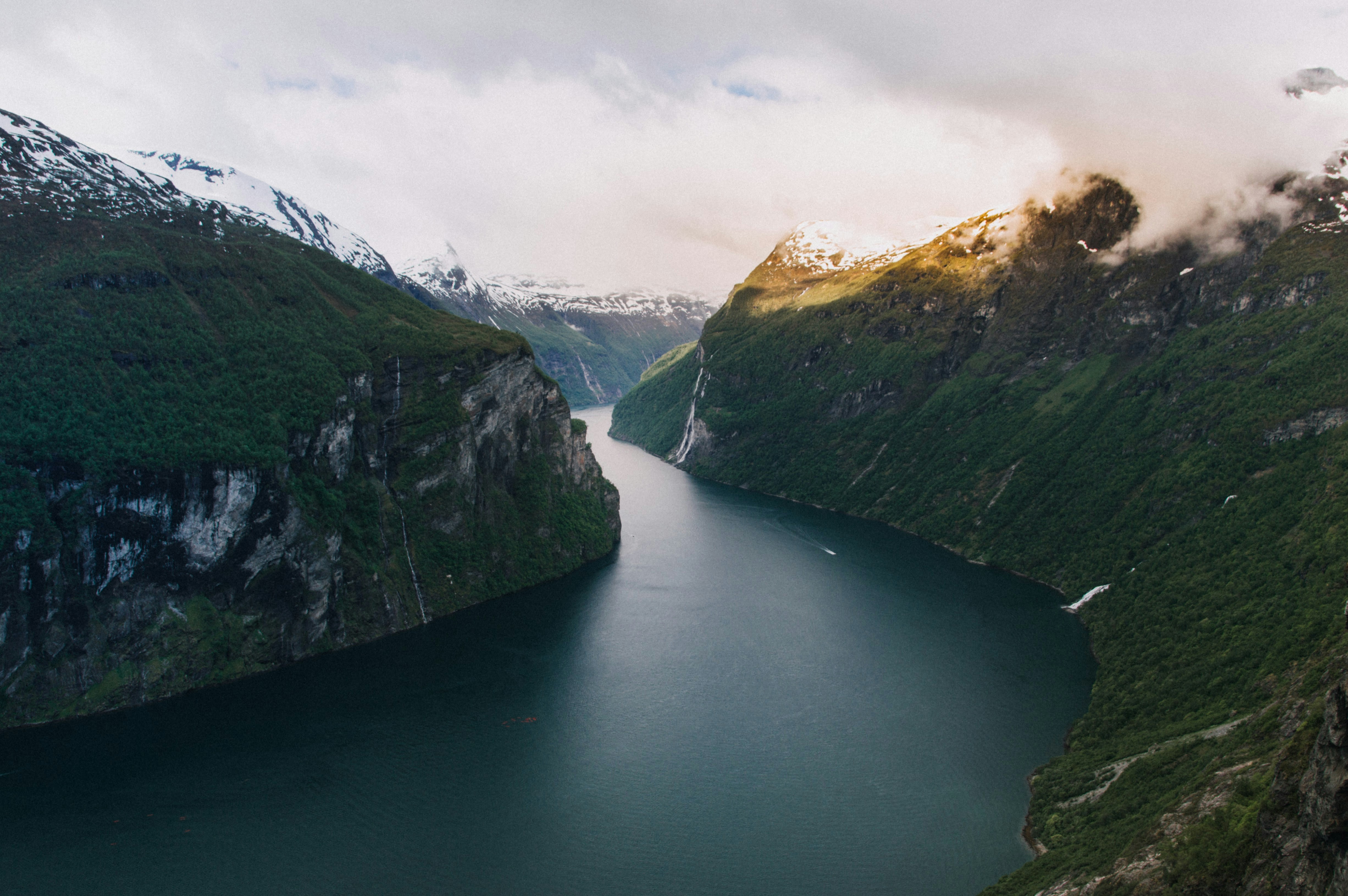
The ink-like, bottomless blue of the Sognefjord and Geirangerfjord, reflecting the immense depth of the water.
Wear this to feel grounded and part of the vast landscape; it creates a moody, high-contrast silhouette against the sky.
This deep, regal blue is a universal flatterer, providing a crisp frame for all skin tones.
The lush, rain-soaked moss and birch forests clinging to the vertical granite walls during the peak July growth.
It’s a sophisticated 'blend' colour that looks organic and expensive against the grey rock and blue water.
This earthy, desaturated green is a miracle for olive and warm undertones, though it stays neutral enough for most.
The iconic, traditional deep-red paint of the wooden fishing huts and farmhouses dotting the shoreline.
Pop hard—this is the definitive 'focal point' colour for any photo taken from a ferry or a mountain lookout.
This cool-leaning, heritage red is exceptionally striking on fair, cool complexions and deep skin tones alike.
The silvery-white bark of Scandinavian birch trees and the pale, misty light of the sun that never truly sets in July.
Avoid wearing this if you're hiking in the mist, but it’s a brilliant 'stand out' choice against the dark water.
This luminous, cool grey-white is a dream for cool and neutral undertones, feeling fresh and airy.
Signature Outfit
A Glacial Cobalt technical trouser paired with a Midnight Sun Birch cashmere crewneck. Pop a Rorbu Vermillion scarf around your neck for that classic Nordic contrast. It’s practical for the shifting fjord microclimates but looks like a deliberate homage to the local architecture and light.
Blend In Like a Local
How to Dress in Fjords in Norway Without Looking Like a Tourist
Skip the neon corals or tropical prints. They feel visually loud and 'lost' against the ancient, stoic scale of the mountains. Also, leave the flimsy flip-flops behind—July in the fjords is breezy and rugged; delicate footwear looks out of place and feels even worse.
Top 3 Outfit Colors to look perfect in every Photo
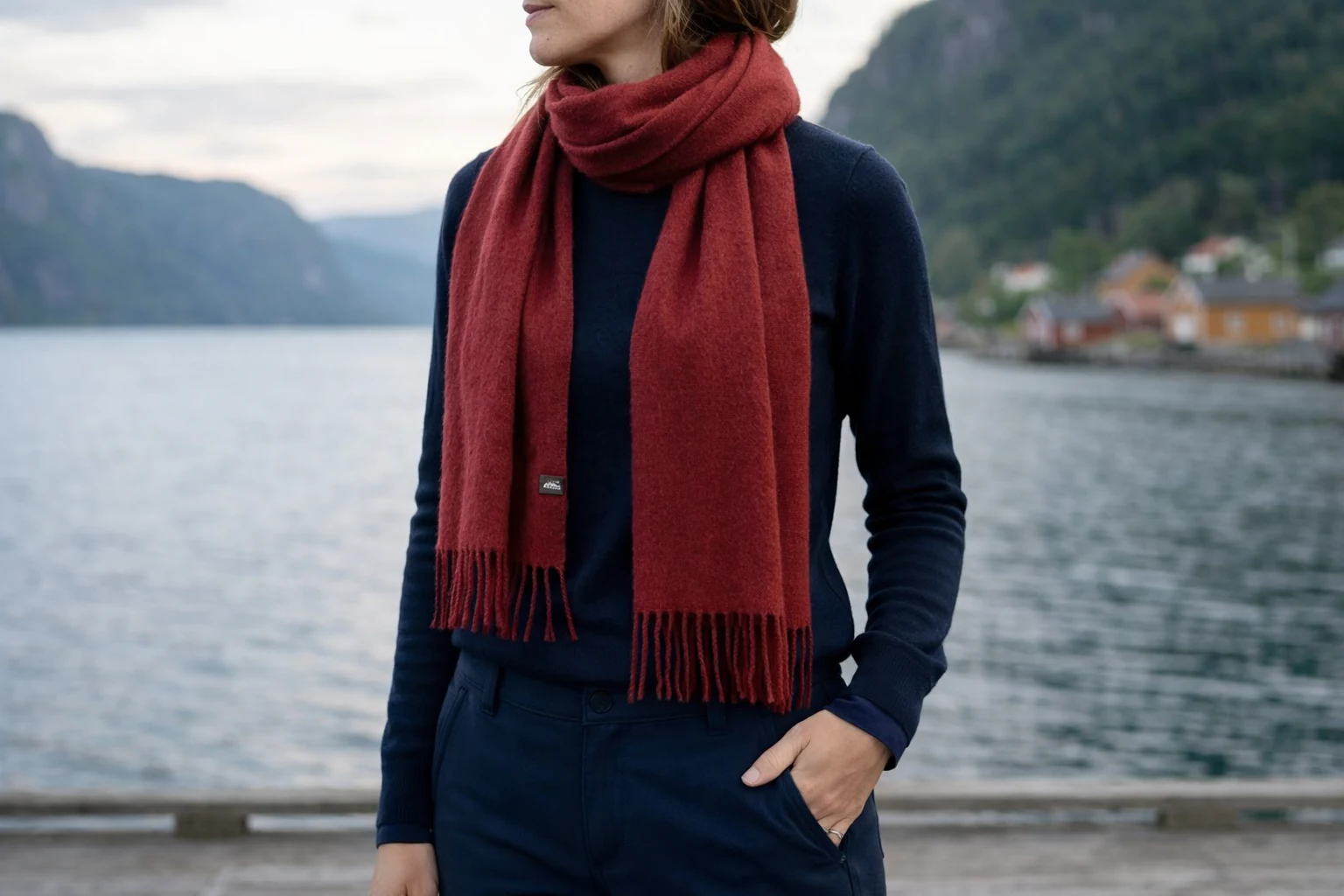
Blend In
Choose a deep midnight navy to match the darkest shadows of the water for a sleek, monochromatic Scandi-cool vibe.
Wardrobe Breakdown
What to wear in Fjords in Norway in July?
Outerwear
The Best Light Waterproofs for Norway's Fjords in July
The big mistake in the fjords is packing for the calendar instead of the conditions. July may be peak season, but a boat ride on the Nærøyfjord, a stop at Stegastein, or a turn up toward a glacier arm can feel cold, windy, and wet within minutes. Locals and repeat travellers solve this with a proper shell over a warm mid-layer rather than one thick coat or no jacket at all. In Bergen, Flåm, and on the ferry quays, you see waterproofs tied around waists even on sunny mornings because rain is never a surprise here. Do not bring a fashion trench as your only outer layer. Pack one compact waterproof shell and one insulating layer that still works when you step indoors for coffee.
Layers
The Best Mid-Layers for Norway's Fjords in July
What really earns its place in the fjords is not another T-shirt but a solid mid-layer. July can feel mild in the village, then suddenly chilly at a glacier viewpoint or on a fast express boat slicing up a long fjord arm. Locals rely on fleece, merino, light puffers, and technical half-zips because they can move between rain, wind, and indoor warmth without a complete outfit change. You will notice how many people carry a sweater or fleece over one arm in places that look sunny on postcards. Do not pack only thin summer tops and hope the weather behaves. Bring two or three warm but not bulky mid-layers, and make at least one of them something you are happy to wear in photos on exposed lookouts.
Footwear
The Best Shoes for Fjord Ferries, Wet Quays, and Valley Walks
Footwear matters in the fjords because even a relaxed trip mixes wet harbour steps, slick lookout platforms, gravel viewpoints, and short trails that are muddier than they first appear. Around Flåm, Bergen, Gudvangen, and Geiranger, locals wear hiking trainers, trail shoes, or sturdy waterproof sneakers rather than anything delicate. The ground changes constantly. One hour you are on a polished ferry deck, the next you are on damp gravel or wooden steps sprayed by mist. Do not bring smooth-soled fashion sneakers or city loafers as your main shoe. Pack one pair with real tread and water tolerance, then add a second easier pair only if you know you will stay mostly in town.
The Edit
Fjords in Norway Capsule Wardrobe
7 days, carry-on only. Built for Norway's ferries, wet quays, lookout stops, valley walks, and fast weather shifts from sun to mist.

Carry-on only
Your weather shield for Norled express boats, Fjord1 deck crossings, and windy stops at lookouts above the water.
Shop shells →The layer that saves you on glacier viewpoints, tunnel-cooled ferry waits, and damp evenings by the quay.
Shop knits →Useful for moving between village cafés, ferry seating, and breezier upper viewpoints without changing your whole outfit.
Shop tops →Better than heavy denim for rain spray, damp benches, and short hikes above places like Flåm or Geiranger.
Shop trousers →For colder morning departures and higher stops where July can still feel like spring.
Shop puffers →Your main pair for wet quays, lookout boards, ferry ramps, and uneven trail sections that hide behind 'easy walk' labels.
Shop shoes →The daypack carries layers, the beanie handles cold deck wind, and the cap helps on long bright July boat hours.
Shop packs →The Core
Your Packing Checklist
0 of 28 items packed
0%
Outerwear
0/4- Waterproof shell for Bergen rain, Norled deck spray, and misty viewpoint stops above the fjords.
- Light insulated layer for colder inner-fjord mornings and glacier-side detours.
- Packable rain cover for fast weather swings between village sunshine and coastal showers.
- Thin beanie for breezy ferry crossings and exposed upper lookouts that feel colder than the harbour forecast.
Tops & Layers
0/4- Merino or fleece mid-layer for Flåm Railway viewpoints, ferry decks, and damp late evenings by the quay.
- Long-sleeve base layers for higher stops where July still feels more like spring than summer.
- Quick-dry tops for boat-and-hike days when rain and sweat can happen within the same route.
- One neat warm layer for fjord hotels and harbourside dinners where the dress code stays casual but practical.
Bottoms
0/3- Hiking trousers or quick-dry trousers for damp paths, wet ferry seating, and gravel lookouts above the water.
- One dark casual trouser for Bergen evenings and cleaner town days between fjord legs.
- Skip heavy jeans as your daily default; they dry too slowly in Norway's fjord climate if the rain catches you.
Footwear
0/4- Water-resistant hiking shoes for wet quays, ferry ramps, and slick viewpoint boards around the fjords.
- Grip-sole trainers for Bergen streets and shorter village walks if you are not doing real hikes every day.
- Warm hiking socks for long boat-and-path days where your feet stay cool even in July.
- Do not bring smooth-soled city shoes for the fjords' wet timber steps, gravel pull-offs, and rain-darkened stone.
Accessories
0/4- Sunglasses for long July glare off the water, especially on inner-fjord cruises and exposed upper roads.
- Cap for bright boat hours when the northern daylight stretches far longer than you expect.
- Compact daypack for carrying shell, fleece, water, and camera gear between ferries and viewpoints.
- Reusable water bottle for bus-and-ferry days where the next village stop can be farther away than it looks on the map.
Toiletries & Health
0/4- SPF 30+ or higher for strong reflected light off fjord water and lingering snow patches on higher viewpoints.
- Lip balm and moisturizer for wind exposure on open decks and colder glacier-side stops.
- Blister plasters for village walks that turn into trail sections or extra lookout detours.
- Prescription medicines plus your prescription copy for a Norwegian apotek if you need a refill.
Documents & Tech
0/5- Type C or F plug adapter for Norway's 230V, 50Hz sockets if you use UK, US, or Australian plugs.
- Passport and entry paperwork: many non-EU visitors, including UK, US, Canada, Australia, and New Zealand passport holders, can visit Norway visa-free for up to 90 days in any 180-day Schengen period in 2026.
- Passport validity check for Schengen travel in 2026: for most non-EU visitors, the passport should be less than 10 years old on entry and valid for at least 3 months beyond your planned Schengen departure.
- EES and ETIAS note for July 2026: Norway is in the Schengen Area, so first non-EU entries may involve Entry/Exit System biometric registration at the border; ETIAS is not yet required for July 2026 because the European Commission says it starts in the last quarter of 2026.
- Install Vy for trains, Skyss for Bergen transport, and keep Norled, Fjord1, and Ferryhopper-like booking confirmations or fjord cruise tickets ready on your phone for boat-heavy days.
Affiliate Picks
Shop the Essentials
Luggage Guide
What Luggage to Bring to Fjords in Norway
The fjords are hard on luggage because they combine train platforms, ferry ramps, gravel viewpoints, and hotel entrances that are not always smooth or lift-served. Compact luggage is much easier than a giant case when you are moving between Bergen, boats, and smaller fjord villages.
Weekend trip
🎒 Structured travel backpack
25–30 L / 7–8 gal
- ✓Best for ferry ramps and small village quays
- ✓Easiest on Flåm and Bergen station changes
- ✓Much simpler than wheels on gravel lookout stops
Fjord trip
🧳 Small carry-on suitcase
35–45 L / 9–12 gal
- ✓Most practical for 4 to 7 nights in Norway's fjords in July
- ✓Holds a shell, fleece, and trail shoes without forcing check-in
- ✓Still manageable between airports, trains, buses, and ferries
Longer road trip
🛄 Medium check-in suitcase
60–70 L / 16–18 gal
- ✓Useful if the fjords are one stop on a longer Norway itinerary
- ✓Leaves room for extra layers and more technical gear
- ✓Still easier to handle than a giant case on repeated ferry days
Plan Around Events
Events That Affect What You Pack
1–5 July 2026
Førdefestivalen
This festival in Vestland mixes indoor and outdoor events, so pack a light waterproof and shoes you can stand in on grass or damp paving rather than dressing only for sunshine.
13–18 July 2026
Moldejazz
Even in July, coastal evenings in Molde can cool off fast, so bring one smarter warm layer and a weatherproof outer shell if you plan outdoor concerts with fjord views.
Before You Charge
Plug & Outlet type in Fjords in Norway


🇺🇸 From the US?
You need a plug adapter in Norway, and older US hair tools may also need a voltage converter because Norway uses 230V. Phone chargers, laptops, and camera chargers are usually fine if the plug brick says 100-240V.
🇬🇧 From the UK?
You need a Type C or F adapter because British Type G plugs do not fit Norwegian sockets. Most UK phone and laptop chargers already handle 230V, but heated hair tools are the ones most likely to catch you out.
🇩🇪 From Germany or much of continental Europe?
You are usually fine without an adapter because Norway commonly accepts the same Type C and Type F plugs and uses the same 230V, 50Hz supply. This is one of the easiest packing matches for the fjords.
🇦🇺 From Australia?
You need a plug adapter because Australian Type I plugs do not fit Norwegian sockets, but the voltage is the same 230V. Most chargers work normally, though straighteners and similar hair tools still deserve a quick check.
Getting Around
How to Get Around Fjords in Norway
The fjords in Norway are not one walkable destination but a web of valleys, quays, ferry crossings, mountain roads, and a few key gateway towns such as Bergen and Flåm. You can walk within villages and around lookouts, but most trips depend on combining trains, buses, ferries, and occasional taxis or rental cars rather than trying to rely on one single system.
Walking
Villages such as Flåm, Geiranger, and central Bergen are walkable in parts, but fjord travel quickly adds hills, quays, gravel lookouts, and weather exposure.
No app needed
Vy
Vy is the key rail operator for fjord gateways, including the Bergen Line and routes that connect Oslo, Bergen, Voss, and interchange points used for fjord trips.
Visit site →Nor-Way Bussekspress and Skyss
Nor-Way handles many long-distance coach links across western Norway, while Skyss covers Bergen and Vestland public transport including buses and Bybanen light rail.
Visit site →Fjord1 and Norled
Fjord1 is Norway's biggest west-coast ferry operator for vehicle and passenger crossings, while Norled runs major express boats and summer fjord routes including Bergen–Sogn–Flåm and Hardangerfjord services.
Visit site →The Fjords
The Fjords operates low-emission sightseeing and transport cruises on famous routes such as the Nærøyfjord, which are often part of classic fjord itineraries.
Visit site →Bolt e-bikes in Bergen
Micromobility makes sense mainly in Bergen rather than in the fjords themselves, and Bolt's bikes and scooters are useful for flatter city stretches before or after fjord travel.
Visit site →Uber and Bolt in Bergen
Ride-hailing is mainly a Bergen gateway tool rather than a deep-fjord solution, but both Uber and Bolt operate in Bergen and are handy for airport, station, or hotel transfers.
Visit site →In Case You Forgot Something
Where to Buy What You Forgot
Galleriet
Shopping CentreThe easiest one-stop city-centre option in Bergen for clothing, practical basics, pharmacy items, and travel purchases before heading deeper into the fjords.
📍 Torgallmenningen 8, 5014 Bergen
🕐 Mon-Fri 09:00-21:00; Sat 09:00-18:00; Sun closed
H&M Bergen sentrum
Fast FashionUseful for emergency layers, rain-friendly basics, socks, fleece-adjacent pieces, and simple clothes that work in Bergen and the fjords.
📍 Olav Kyrres gate 1, 5014 Bergen
🕐 Mon-Fri 09:00-21:00; Sat 09:00-18:00; Sun closed
MENY Bergen Storsenter
SupermarketBest for trail snacks, bottled water, picnic supplies, breakfast food, and all the practical grocery refills you need before a long ferry or train day.
📍 Strømgaten 8, 5015 Bergen
🕐 Mon-Fri 06:00-23:00; Sat 07:00-21:00; Sun closed
Apotek 1 Lagunen
ApotekA reliable pharmacy option for blister plasters, sunscreen, pain relief, motion-sickness tablets, and all the small things people forget before the fjords.
📍 Laguneveien 1, 5239 Rådal, Bergen
🕐 Mon-Fri 09:00-21:00; Sat 10:00-18:00; Sun closed
XXL Bergen Lagunen
Outdoor GearThe practical rescue stop for waterproofs, hiking shoes, socks, daypacks, and trail gear if your packing was too city-focused for the fjords.
📍 Laguneveien 1, 5239 Rådal, Bergen
🕐 Mon-Fri 10:00-21:00; Sat 10:00-18:00; Sun closed
Lagunen Storsenter
Shopping CentreA strong backup option near Bergen with broad opening hours and a dense mix of fashion, food, and practical stores if you need to replace multiple items at once.
📍 Laguneveien 1, 5239 Rådal, Bergen
🕐 Mon-Fri 10:00-21:00; Sat 10:00-18:00; Sun closed
Free download
Fjords in Norway packing checklist
Get your Norway fjords printable checklist plus a bonus route guide with ferry tips, scenic stops, and what to wear on boats, hikes, and viewpoint days.
No spam, ever.
Same Time of Year
Other European cities to visit in July
A diverse pick across countries — packing for July weather, with city-specific color palettes and capsule wardrobes for each.
What to pack for Antalya in July
Turkey
What to pack for Berlin in July
Germany
What to pack for Bruges in July
Belgium
What to pack for Bulgaria in July
Bulgaria
What to pack for Cinque Terre in July
Italy
What to pack for Copenhagen in July
Denmark
What to pack for Ireland in July
Ireland
What to pack for Lake Bled in July
Slovenia